Massachusetts
The Long WalkMassachusetts is the threshold at which the Long Walk’s geography becomes historical spectacle. The state is not merely another stretch of road: reaching it would make this the first Walk in seventeen years to cross the boundary, while the seven surviving Walkers enter under rain, wind, banners, and the gaze of a crowd already trained to turn suffering into celebration.
Border and Setting
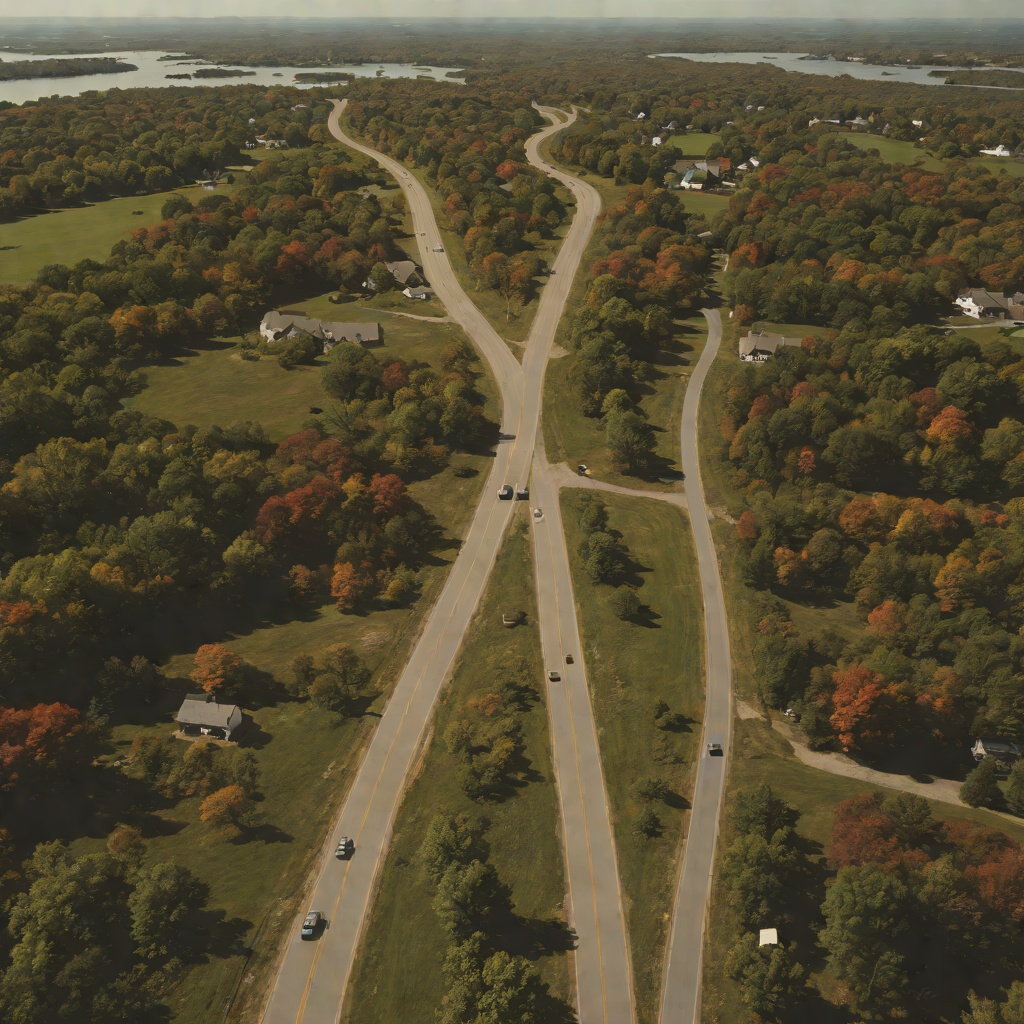
Massachusetts appears at the end of a narrowing approach through New Hampshire. A banner announces that only fifteen miles remain before the border, emphasizing the peculiar geography of the route: New Hampshire is reduced to a narrow neck separating Maine from Massachusetts. The boundary is therefore both a measurable distance and a dramatic threshold. The Walkers have spent the contest converting miles into bodily endurance, and the state line gives that measurement a historical consequence.
The crossing occurs in harsh weather. When Garraty, Baker, McVries, George Fielder, Bill Hough, Milligan, and Stebbins enter Massachusetts, the rain remains constant and monotonous, while the spring wind howls with what the narrative presents as young, unknowing cruelty. It strips caps from spectators and sends them spinning in brief arcs across a sky the color of whitewash. The landscape does not offer a triumphant natural welcome; the border is crossed through exposure, fatigue, and continued physical assault.
The Expected Spectacle
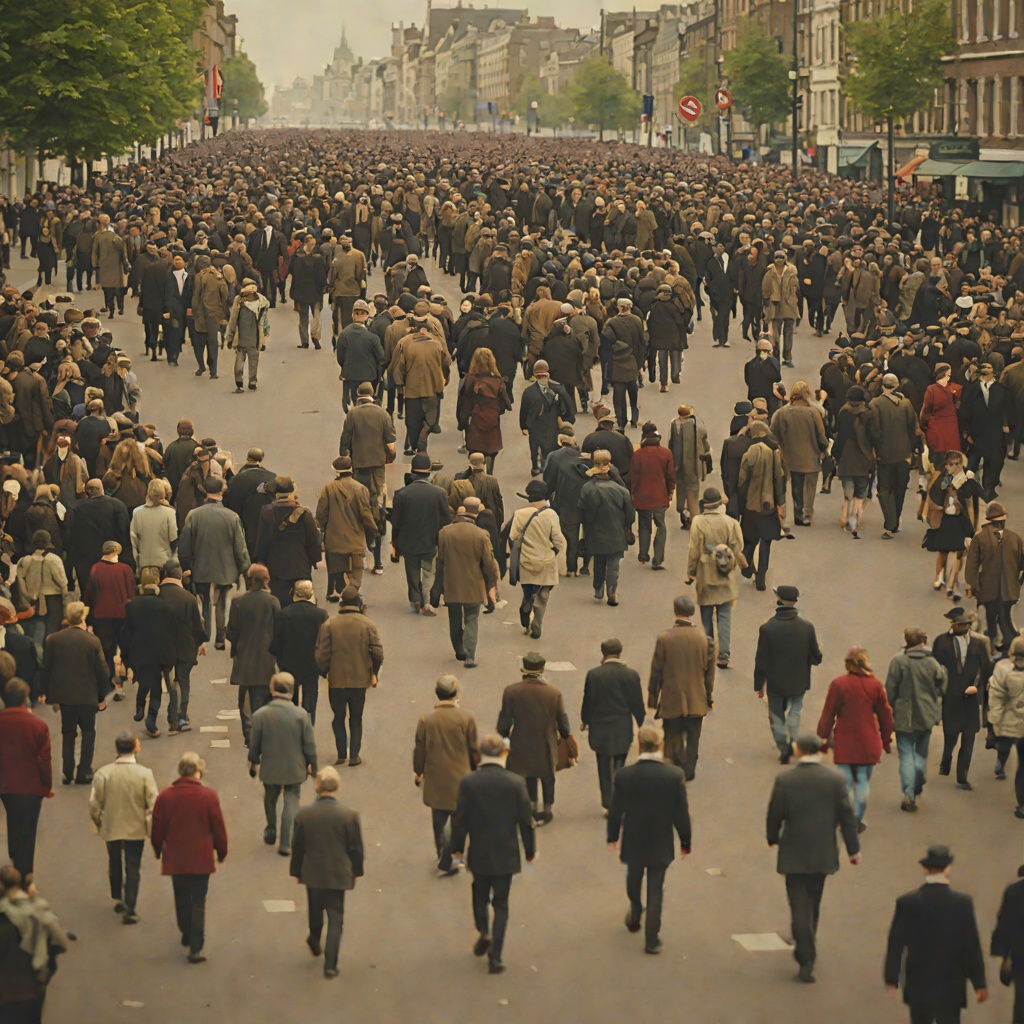
The approach to Massachusetts is governed by anticipation. McVries predicts that the first Walk to reach the state in seventeen years will make the public go crazy, and the prediction extends a pattern already established along the route. At Caribou, a television crew has illuminated the road with a battery of lights, a reporter has thrust a long-reach microphone toward different Walkers, and technicians have unreeled electric cable while the crowd cheers both the contestants and the machinery of coverage. When the cable runs out, the reporter retreats toward the mobile unit through the tangles, yet the spectators continue to respond enthusiastically, raising posters of the Major and waving toward the cameras.
The same conversion of endurance into public entertainment grows more extreme at the hundred-mile mark. State police hold back deep ranks of spectators with bright orange nylon ropes while flashbulbs burst and a screaming child struggles against a policeman, clutching a toy glider and an autograph book. Later, Oldtown becomes a nightmarish parade of arc-sodium light, confetti, newspaper scraps, telephone-book fragments, and toilet paper, a local passage presented as a cheap version of a national ticker-tape celebration. Massachusetts inherits this spectacle at its most concentrated: the border is a civic event staged around bodies that are already failing.
A State Line Inside the Contest
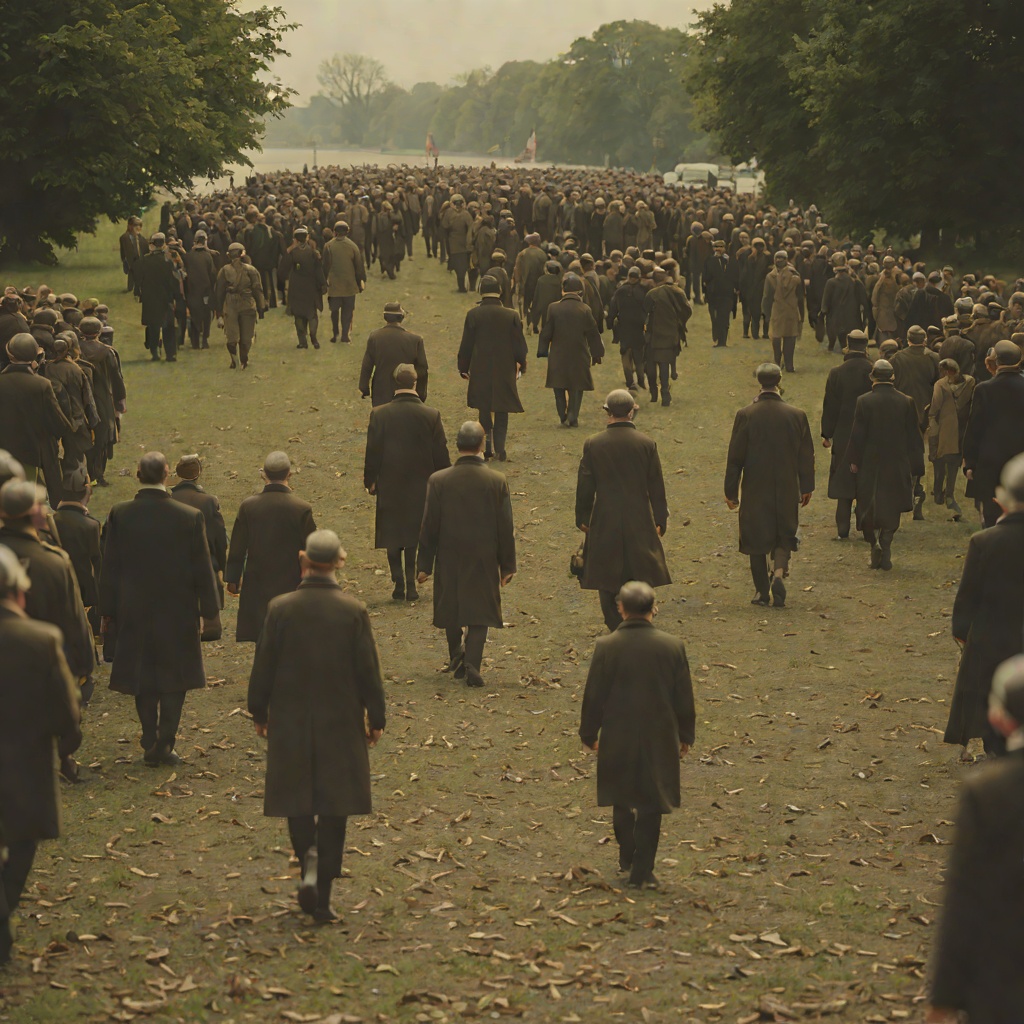
The crossing sharply reduces the field. Only seven Walkers remain: Ray Garraty, Arthur Baker, Peter McVries, George Fielder, Bill Hough, Milligan, and Stebbins. Their names momentarily preserve individuality, but the contest has repeatedly threatened to replace names with numbers. After Ewing is shot for falling below speed, McVries observes that he bleeds the same color as anyone else; the death is then absorbed into the body count, with the odds adjusted infinitesimally for those still moving. At the twenty-four-hour mark, Garraty notes that ninety-nine miles have been completed while thirty-six Walkers are gone, a numerical achievement inseparable from mass disappearance.
The approach to Massachusetts also exposes the gap between public image and lived experience. The crowd cheers, television searches for usable faces and statements, and banners offer congratulations, but Garraty experiences the route as hunger, pain, sleep deprivation, and fear. When he imagines being eliminated, he sees the likely record reduced to a name, number, mile, and headline proclaiming that Maine’s Own has become another contestant to fall. Massachusetts thus does not restore the Walkers to ordinary civic identity; it makes their reduction into public data more visible.
The Crossing and Its Immediate Effect
At the border, the pomp and thunder slowly pass behind the seven survivors. The crossing is real, public, and historically unusual, but its emotional charge does not last. Rain and wind continue after the banners and ceremony recede, so the achievement cannot become rest. The state line produces a pause in meaning rather than a release from danger: the Walkers have entered a place the public regards as extraordinary, yet the same rules, bodily limits, and threat of elimination remain in force.
For Garraty, however, the approach and crossing coincide with a strange bodily reprieve. Shortly after Stebbins’s confession, he feels an odd lifting of his entire being. His feet seem to remember what they once were, and the blinding pains in his back and neck undergo a frozen cessation. The sensation resembles reaching a final peak after a sheer climb, emerging from mist into cold sunshine even though there is nowhere to go except downward at flying speed. Massachusetts therefore functions as both summit and precipice: it briefly makes renewed motion imaginable while confirming that the route beyond the threshold can only continue toward collapse.
Narrative Significance
Massachusetts condenses the Long Walk’s central contradiction. It is a destination important enough to be announced by banners and remembered as a seventeen-year precedent, yet it remains only another stage in a contest that converts lives into distances, warnings, eliminations, and headlines. The state boundary gives the surviving Walkers a collective historical distinction while leaving them individually vulnerable; seven bodies arrive, but the public meaning of their arrival is built from the thirty-six who have already disappeared.
The location also clarifies how the contest produces space. Roads, town centers, police lines, cameras, lights, banners, and state boundaries organize the Walkers’ movement and the spectators’ sight. The crowd is not simply present beside the route; it helps transform the route into an event. By the time the seven enter Massachusetts, the border has become a stage on which endurance is displayed, counted, and consumed. The crossing’s significance lies precisely in that double movement: the Walkers advance into a new state, while the spectacle advances toward the final destruction of the people who make it visible.